


I love the idea of repeating a menu for big holidays year over year—a beef Wellington always on Christmas, a certain heart-shaped sugar cookies always for Valentine’s Day, a flag ice box cake and fun pasta salad always for the Fourth of July, etc. etc. This is a big part of building a “we always” family culture, as food with its multi-sensory appeal and the memories made gathering around the table have a way of piercing the fabric of time, providing annual, mini-portals through which we may travel back and grasp a happy and holy moment.
(Tip: I purchased this fun binder and corresponding dividers to store and organize our family recipes)
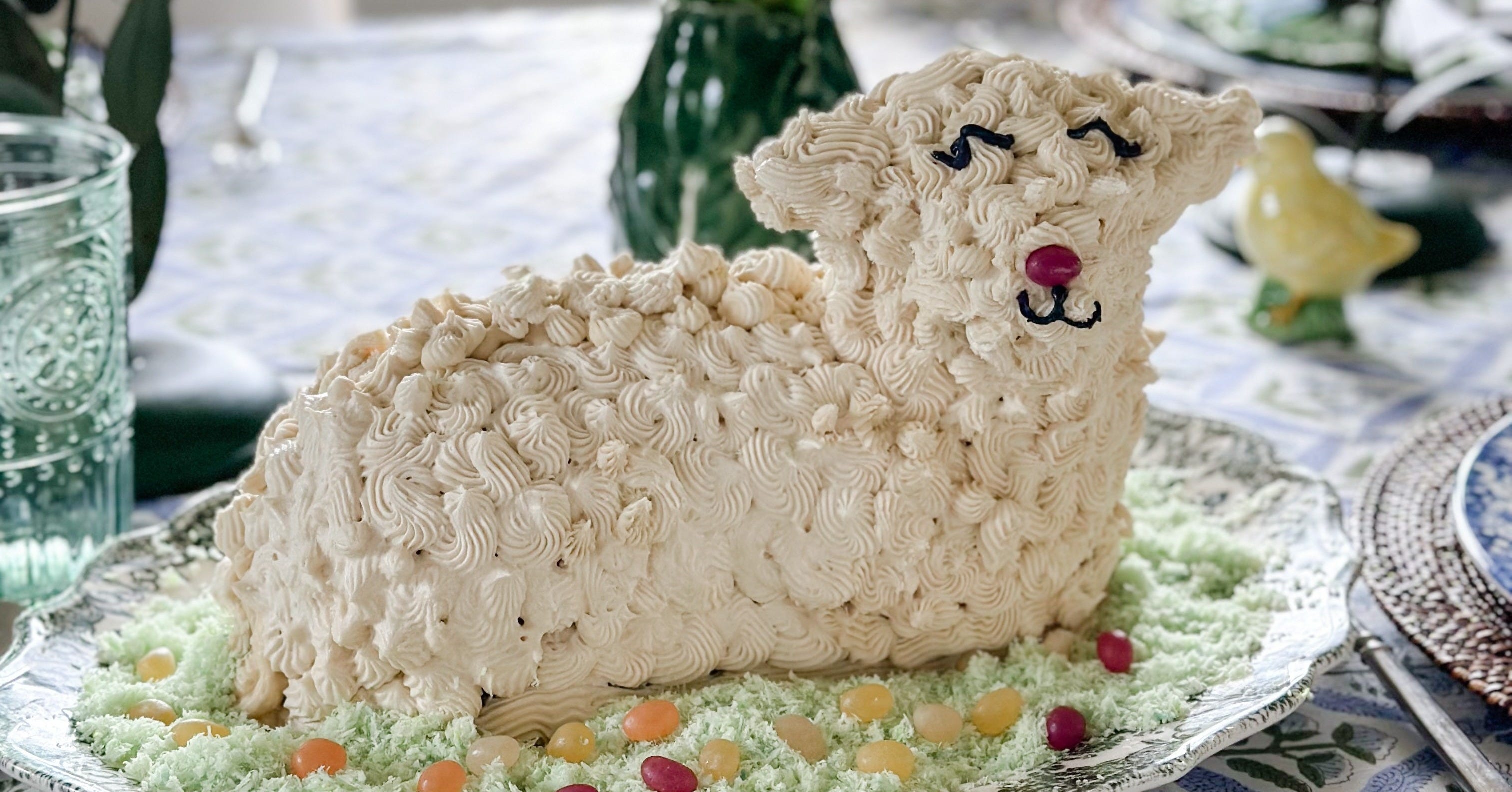
For Easter, the biggest and most important feast and celebration of them all for the Christian home, we’ve relied on our trusty scalloped potatoes, ham, green beans, deviled eggs and fluffy rolls for dinner prefaced by Resurrection Rolls before church and a cinnamon roll, breakfast casserole and candied bacon for brunch. But what for the dessert? Last year in a spurt of newly postpartum creativity and energy, I decided that, for our family, it would be a lamb cake.
I could think of nothing more whimsical, nostalgic and celebratory—yet deeply symbolic and spiritually significant—to honor the Paschal Lamb on the day of His glorious Resurrection.
The tradition of an Easter lamb cake has German and Polish roots, and spread to the United States through European immigrants where it enjoyed popularity in mid-century American homes with the rise of domestic culture.
And while lamb cake culture has waned significantly, it has experienced somewhat of a renaissance as of late thanks in part to viral lamb cake Pinterest fails, Martha’s seal of approval, and, perhaps (I hope) a collective return to tradition and intention in the food we make and the ways we celebrate the feasts, observe fasts, and walk through the seasons of the year.
Here’s how we make ours:
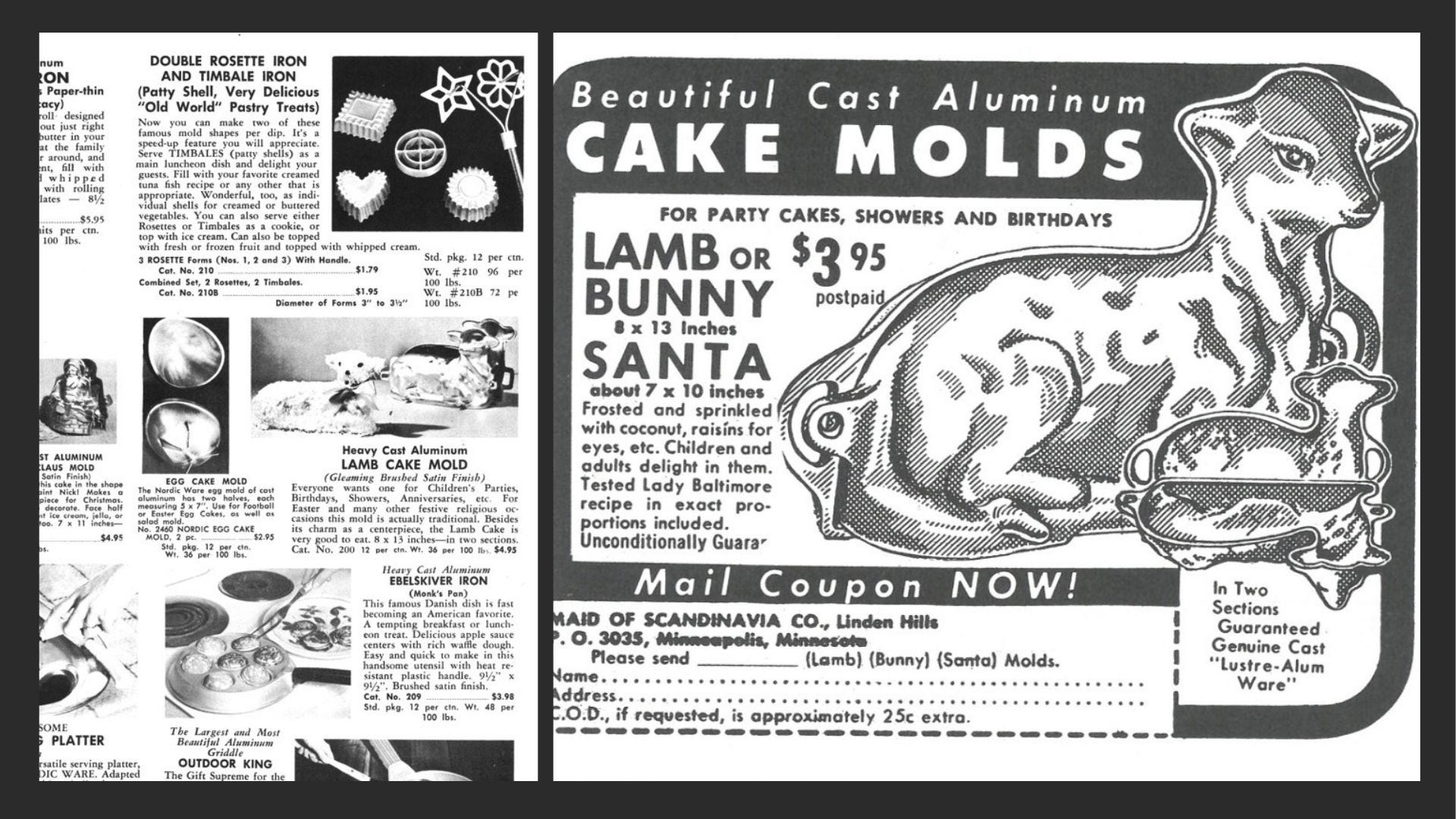
The most critical element of any lamb cake construction is, well, the Lamb Cake Pan. We have this aluminum one from Nordic Ware (first produced by the company in the 1940’s!) and it has worked perfectly so far.
We largely follow Nordic Ware’s lamb cake recipe, but I wanted to call out a few key things to ensure your lamb cake baking and decorating success:
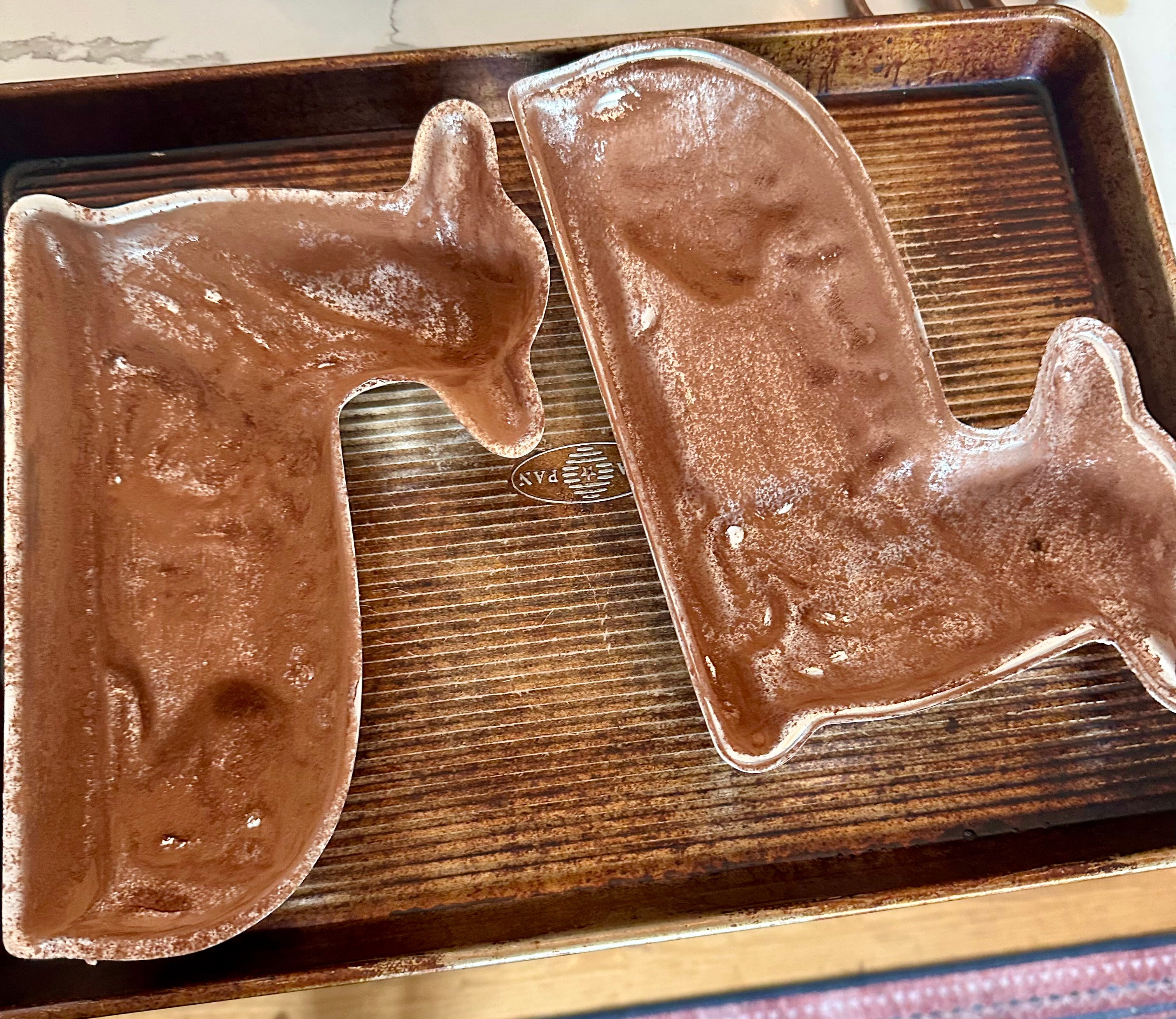
When they indicate buttering the entirety of the pan to be very important, they mean it! Every nook and cranny must. be. greased, or else your poor dense and chocolately lamb might be missing its muzzle, or an ear! Also, we only fill half of the pan—not both sides! And the mold should be placed face down and that side filled.
For the cocoa powder used for dusting, Guittard’s Cocoa Rouge cocoa powder has never let me down in this instance, or in stovetop hot cocoa on snow days.
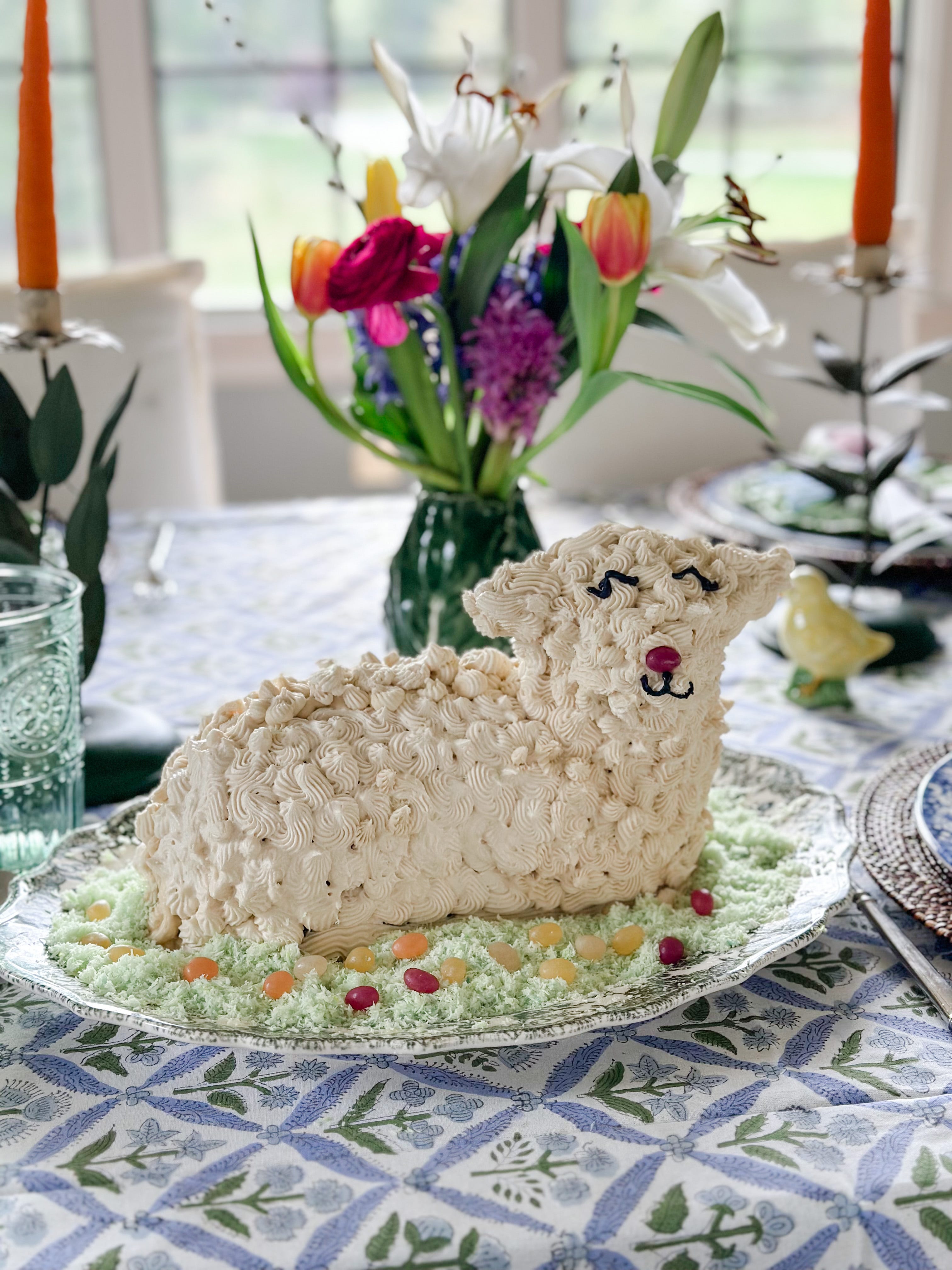
Getting the base cake part of the lamb just right can be a bit tricky, so it’s best to wait to involve young children until the decorating part. Once the cake has cooled, been masterfully extracted from the mold, and secured onto a platter using a thick icing or frosting, the sky’s the limit. In the past, we have piped the “wool” onto our lamb using a thick buttercream (hint: it is important to make enough in one batch for the entirety of the lamb, or you’ll end up with some odd color variance from batch to batch based on various conditions, and also, it must be cold—take care to refrigerate as needed as frosting starts to melt and run. It also helps to refrigerate the cake itself before decorating), use black royal icing for the darling squinty eyes, a pink jelly bean for the nose and shredded coconut colored with natural green food dye for the grass. Many traditional lamb cakes also boast a red ribbon or bow around the neck to symbolize Christ’s sacrifice and a flag with a cross to commemorate His victory over death.
Let the toddler in your life have the very important job of dyeing said coconut grass by dumping the shreds in a Ziploc along with the dye and shaking to their heart’s content.
Keep refrigerated until about 2-3 hours before your big Easter meal (this cake doubles as a great centerpiece!) and then bask in the glory of the memories made in the great feast and celebrations of the risen King!
Also, try to remember that the sort of “off-ness” of the lamb cake is part of the whole charm of it all. Those Pinterest fails went viral for a reason and yours, like mine, will not be perfect either (and what do you know, Jesus still died and rose for you!)
Finally, no Easter food post would be complete without my mentioning the most epic of Easter traditions television specials—one that feels old school and nostalgic in the very best (British) way…
Mary Berry’s Easter Feasts (two parts!) is the most charming and fun and includes a visit to the Anglican cathedral that was supposedly home to the OG hot cross bun before showing us how to make her “heavily fruited, luxury bun.”
I have always been a Berry fan, but hadn’t realized she was rooted in a strong Christian faith until this particular special, and it was fascinating to learn about how Christians of various denominations across Britain celebrate the highest holy day of the Christian year. There is also a beautiful moment in which the gospel is preached so explicitly you almost can’t believe this was aired on British TV. 10/10 recommend.
Happy Baking & Lamb Cake Decorating!
I loved making Lamb cake growing up. One year the head fell off, and so we stuck along skewer through an d made a cross with another little piece of wood so it looked like the lamb of God holding the cross. 🤣 this year my mom suggested bringing it back…and I suggested the bold attempt at chocolate shavings for the wool. Will report back!
Lamb cake is one of our favorite traditions, too :). It is so much fun to see how they turn out! Mine always look a little silly, but that's part of the fun.